
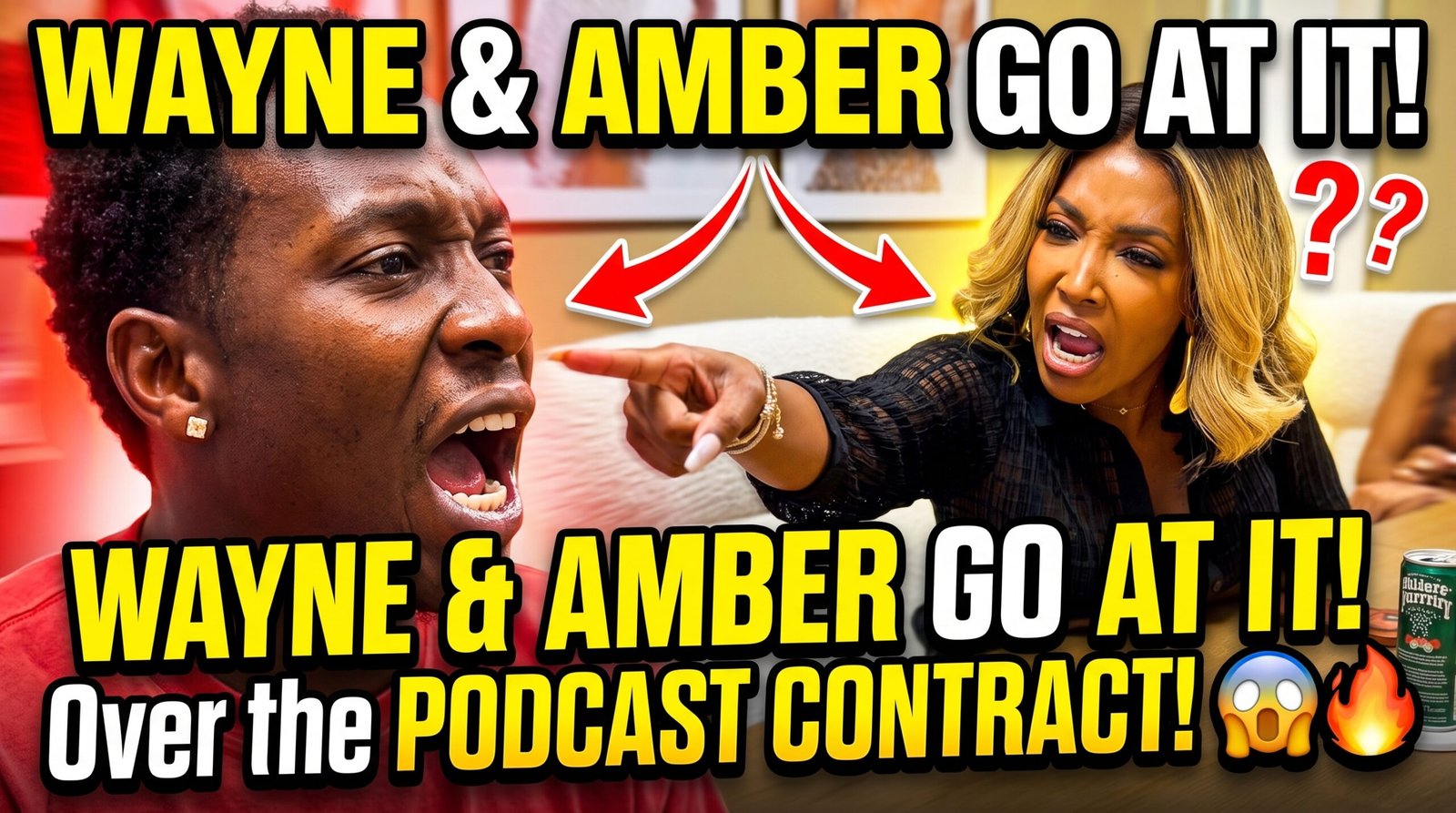
When Wayne and Amber Clash Over Who Really Deserves the Money
A Simple Business Talk Turns Into a Heated Debate
What starts as a conversation about a podcast contract quickly turns into a serious confrontation between Wayne and Amber. Both of them have strong opinions about how the podcast should be structured, how the money should be divided, and who deserves a percentage of the business.
The disagreement isn’t really about a single number. It’s about ownership, contribution, trust, and the future value of the show.
Amber believes the team is helping create something that could become much bigger. Wayne, however, believes the value of his existing brand cannot simply be separated from the podcast.
As the conversation develops, it becomes obvious that they are looking at the same business from two completely different perspectives.
Amber Wants the Team to Benefit From Growth
Amber’s main concern is what happens if the podcast becomes extremely successful.
She understands that everyone may be paid for their current work, but she doesn’t want the team to miss out if the show eventually becomes a major entertainment brand.
Her thinking is straightforward.
If people are investing their time, energy, creativity, and personality into making the podcast successful, shouldn’t they have some kind of participation in that success?
A fixed payment might look good today, but the situation could be very different one or two years from now.
If the podcast’s audience doubles or triples, the original agreement could suddenly look very small compared with the value being generated.
That possibility is what makes Amber question the long-term contract.
Wayne Reminds Everyone Where the Brand Started
Wayne sees the situation from another angle.
Before the podcast, he already had an established audience and entertainment career.
He spent years creating comedy, building his reputation, developing his audience, and turning his name into a recognizable brand.
From his perspective, that history matters.
He isn’t starting a business from zero with a group of people who all contributed equally from the beginning.
Instead, he already has a successful brand, and the podcast is being built on top of that foundation.
Wayne believes the difference between creating the foundation and joining the project later is extremely important when discussing ownership.
The Conversation Moves Toward Equity
Once equity enters the conversation, things become much more serious.
Getting paid for work is one thing.
Owning part of the business is something completely different.
If someone receives a percentage of a successful company, that percentage could potentially become extremely valuable.
That’s why Wayne is careful about giving away ownership.
He wants everyone to understand that equity isn’t simply another form of payment.
It represents a piece of the business itself.
Amber, meanwhile, sees equity as a way of making sure the people helping build the show have a reason to remain invested in its future.
Wayne Brings Up the Idea of Leverage
One of the strongest points Wayne makes is about leverage.
In entertainment, being talented doesn’t automatically mean you have negotiating power.
Having alternatives can create leverage.
If another company wants to sign you, another podcast wants you, or another platform is willing to pay you significantly more, you suddenly have something powerful to bring into negotiations.
Wayne argues that this is what separates a demand from a strong negotiating position.
Simply saying that you deserve more isn’t necessarily enough.
There needs to be evidence that the market is willing to pay more.
Amber Questions the Three-Year Commitment
Amber’s biggest concern is the length of the contract.
A three-year agreement may sound reasonable when the podcast is still developing, but nobody knows exactly where the show will be in three years.
It could become much bigger.
The audience could grow dramatically.
Sponsors could start offering major deals.
The podcast could attract attention from large entertainment companies.
If that happens, Amber doesn’t want the team to remain stuck with the same terms they accepted at the beginning.
She believes there should be an opportunity to revisit the agreement as the business grows.
Wayne Wants Stability
From Wayne’s perspective, constantly changing contracts could create problems.
If everyone is renegotiating every time the podcast experiences a successful month, it could become difficult to build a stable operation.
A longer contract can give a team structure.
Everyone knows their responsibilities.
Everyone knows the expectations.
And everyone can concentrate on producing content instead of constantly discussing money.
Wayne appears to value that kind of stability.
He wants the team to believe in the long-term vision rather than focusing only on what the podcast is worth today.
Trust Becomes a Major Issue
The debate eventually moves beyond business numbers and into the subject of trust.
Wayne wants the people around him to trust that he will continue making decisions that benefit the overall business.
For him, a successful team needs more than contracts.
It needs relationships.
But Amber takes a more cautious approach.
She doesn’t necessarily reject the idea of trust. Instead, she believes trust should work alongside a clear agreement.
A contract doesn’t automatically mean you don’t trust someone.
It simply makes sure everyone understands what was agreed upon.
That’s a common point of tension in business partnerships.
Amber Uses Wayne’s Own Deals as an Example
Amber makes the argument even stronger by pointing toward Wayne’s relationships with major corporations.
Large companies don’t rely solely on verbal promises.
They negotiate detailed agreements.
They discuss money, responsibilities, deadlines, expectations, and rights.
Everything is documented.
Amber’s point is that if major corporations require contracts when dealing with Wayne, then the podcast team should also be able to ask for clear terms.
That comparison adds another layer to the disagreement.
The Real Fear Is Future Success
Ironically, both Wayne and Amber seem to be thinking about the future.
Wayne is thinking about protecting the brand if it becomes bigger.
Amber is thinking about protecting the team if the podcast becomes bigger.
They simply have different ideas about what protection means.
For Wayne, protection means maintaining control over something he spent years building.
For Amber, protection means making sure the team isn’t locked into an agreement that becomes unfair if the podcast’s value changes dramatically.
That’s why the disagreement becomes so intense.
Both sides are trying to prepare for success.
Who Actually Creates the Value?
The biggest question hanging over the conversation is difficult to answer.
Who deserves the most credit when a podcast becomes successful?
Is it the person who already had the audience?
Is it the people appearing on the show?
Is it the producers and crew?
Is it the person responsible for the business decisions?
Or is success the result of everyone’s combined contribution?
There may not be one simple answer.
A successful entertainment brand usually depends on many different pieces working together.
But those contributions don’t necessarily have equal financial value.
That’s the complicated part.
The Argument Reveals a Bigger Business Lesson
The conversation between Wayne and Amber is entertaining, but it also highlights an important lesson for anyone entering the entertainment industry.
Never assume that hard work automatically translates into ownership.
At the same time, ownership isn’t the only way to reward people who contribute to a business.
There can be bonuses, performance incentives, renegotiation clauses, revenue-sharing agreements, and other arrangements.
The important thing is that everyone understands the deal before committing.
Wayne and Amber Remain on Opposite Sides
By the end of the conversation, it’s clear that neither Wayne nor Amber is completely willing to abandon their position.
Wayne continues to emphasize the importance of his existing brand and the leverage that comes with it.
Amber continues to push for a deal that gives the team more protection and a chance to benefit from future growth.
Neither argument is as simple as right versus wrong.
They are two different approaches to business.
One focuses on protecting the foundation.
The other focuses on sharing the upside created by future growth.
Final Thoughts
The heated exchange between Wayne and Amber shows why business partnerships can become complicated when money and relationships overlap.
What begins as a discussion about a podcast contract becomes a much bigger conversation about ownership, loyalty, leverage, trust, and future success.
Wayne believes his years of work building the brand give him a strong reason to maintain control.
Amber believes the team’s contribution deserves stronger recognition and protection.
And perhaps the most interesting part is that both sides are thinking about what could happen next.
The podcast may be successful today, but if it becomes even bigger tomorrow, the decisions made during these negotiations could become incredibly important.
That’s what makes this argument so compelling: they aren’t just fighting over today’s money—they’re fighting over tomorrow’s value.