
A Long Day Gets Longer
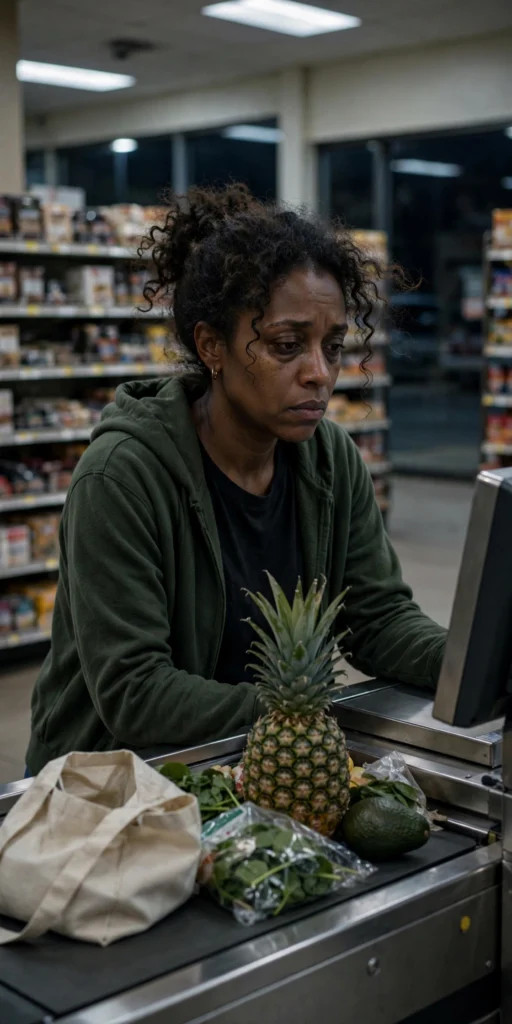
Monica had been on her feet for fourteen hours, and her body was keeping count.
The double shift at the hospital had ended at nine, but the fridge at home was empty, and her son needed lunch for school the next day. So instead of driving home to sleep, she drove to the twenty-four-hour grocery store on the edge of town, the one with the flickering sign and the self-checkout lanes that always seemed to be half broken.
She moved through the aisles slowly, the way exhausted people do, dropping things into her basket without much thought. Milk. Bread. A pineapple because it was on sale and her son loved it. By the time she reached the self-checkout, her eyes were burning and her shoulders ached.
The store was nearly empty. One cashier lane was open at the front, staffed by a young woman with sharp eyes who watched every customer like they owed her something. Her name tag said Sarah.
Monica chose the self-checkout, scanned her items one by one, and paid with a twenty-dollar bill from her wallet. The machine took it. She collected her change and her receipt, bagged her groceries, and started toward the door.
She never made it past the exit.
The Woman at the Register
“Excuse me! Ma’am!”
The voice was sharp. Monica turned to see Sarah the cashier hurrying toward her, with the store’s security guard trailing behind.
“You didn’t scan everything,” Sarah said, loud enough for the whole front of the store to hear.
Monica blinked. “I scanned everything. I have the receipt right here.”
Sarah folded her arms. “The pineapple. And I saw you put something in your bag before you scanned it.”
“I didn’t,” Monica said, her tired voice flat. “Check the receipt. Check the cameras.”
But Sarah was already shaking her head, and the security guard was already reaching for his radio. Within minutes, the situation had gone from a tired woman trying to get home to a full scene at the front of the store. Other customers stared. Someone pulled out a phone.
Monica felt the familiar heat rise in her chest — not panic, but something colder. She had seen this kind of thing before. She knew exactly how it could go.
Eyes on Her
What Monica didn’t know was that she had been watched from the moment she walked in.
The security office above the store floor had a wall of monitors, and the guard on duty had been tracking her through the grainy feeds — the way she lingered in the aisles, the way she glanced around. To a tired nurse buying groceries, it was nothing. To a guard trained to spot shoplifters, it looked like a pattern.
Sarah had added fuel. Earlier that evening, her own register had come up short — twenty dollars missing. Instead of reporting it honestly, she had pointed the finger at the weary woman at the self-checkout. It was easier than admitting what she had done with the money.
Nobody in the store knew the truth yet. But someone was about to find out the hard way.
“Ma’am, Turn Around”
The police arrived in eleven minutes.
Two officers walked in, listened to Sarah’s version for about thirty seconds, glanced at the security guard’s nod, and made their decision. One of them stepped toward Monica.
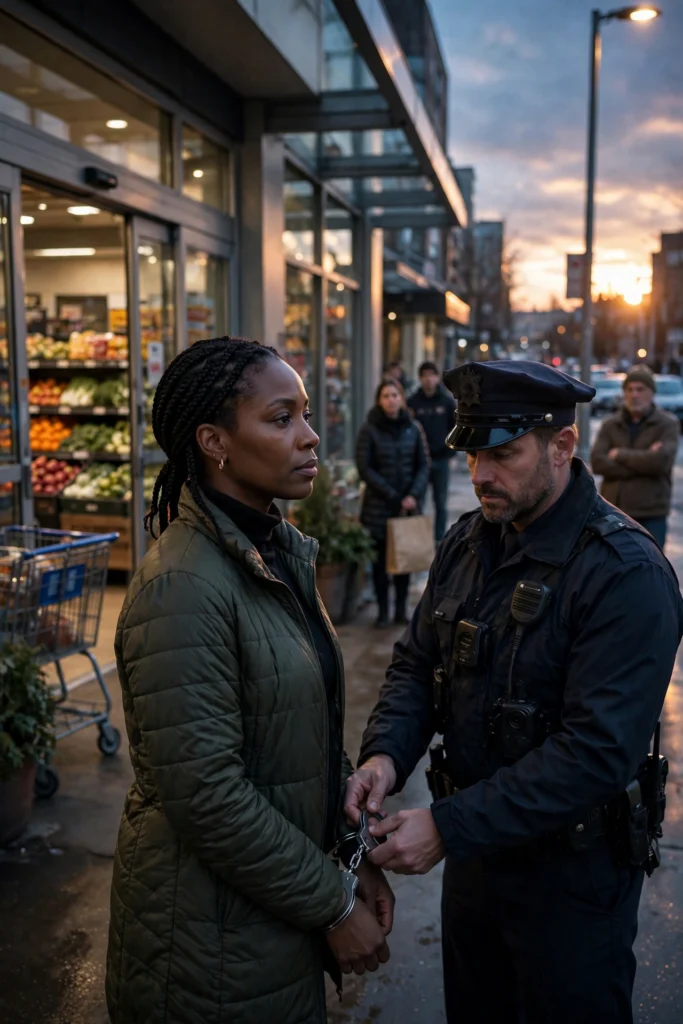
“Ma’am, turn around. Hands behind your back.”
Monica’s heart hammered, but her voice stayed steady. “Officers, this is a mistake. I paid for everything. My receipt is in the bag.”
“Tell it to the judge,” one of them said, and the cold metal clicked around her wrists.
The store went quiet. Sarah watched with her arms crossed, a small satisfied look on her face. The security guard looked away. And Monica — exhausted, humiliated, groceries abandoned at the door — was walked out to the patrol car like a criminal.
She didn’t cry. She didn’t beg. She just kept thinking about her son, asleep at home, waiting for a lunch that was sitting in a bag by the store’s exit.
The Cell
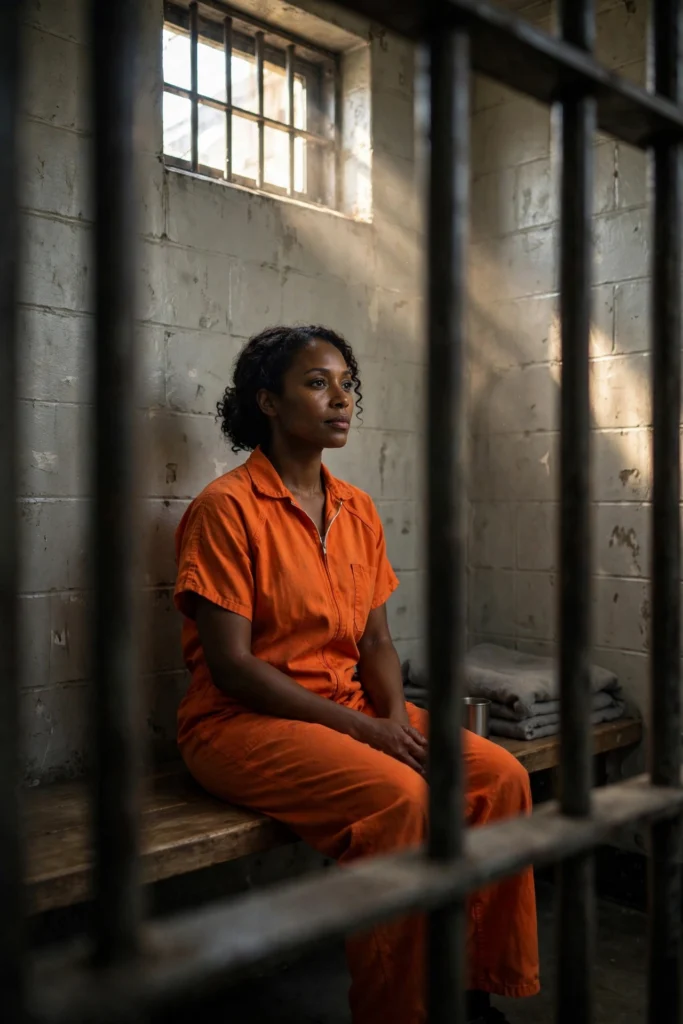
The holding cell smelled like disinfectant and old concrete.
Monica sat on the metal bench in the orange jumpsuit they had given her, her own clothes bagged and tagged somewhere down the hall. Across from her, a woman slept sitting up. Somewhere down the corridor, someone was shouting about a lawyer.
Monica stared at the bars and thought about how fast a normal night could collapse into something unrecognizable. Fourteen hours on her feet saving lives, and now this — a cell, a jumpsuit, a charge she didn’t earn.
She had told the booking officer her name. Monica. She had given her date of birth, her address, her phone number. She had asked for a phone call and been told to wait.
So she waited.
What she didn’t know was that two floors above her, in a cramped office with buzzing lights, everything was about to change.
The ID Check
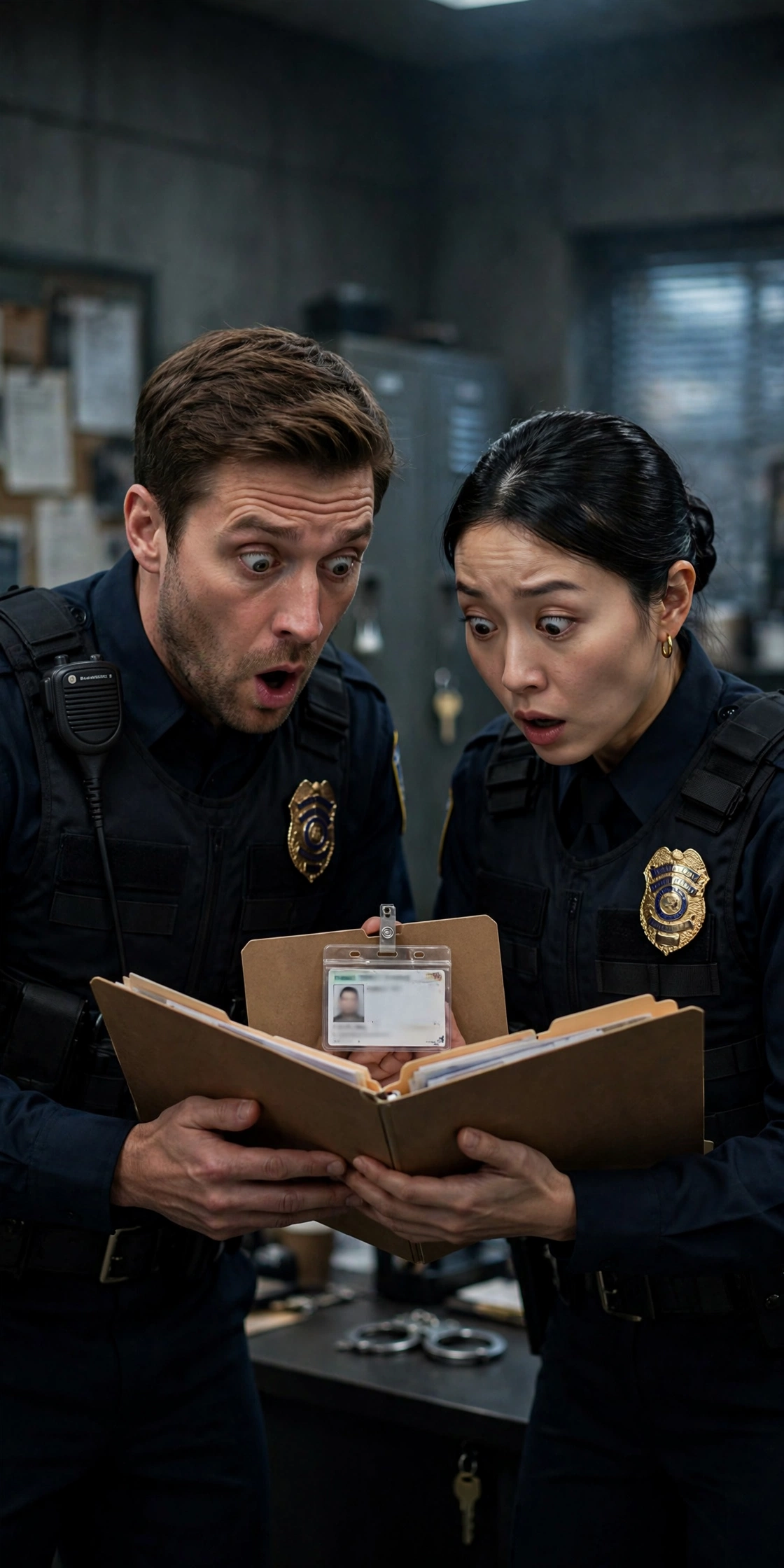
Officer Daniels was the one who ran it. Routine. Every arrest got the same treatment — name in the system, warrants check, background pull. He typed “Monica” into the terminal, hit enter, and leaned back with his coffee.
The screen loaded.
Daniels stared at it. Then he set the coffee down slowly, stood up, and walked — fast — to his sergeant’s desk.
“Sarge,” he said, his voice strange. “You need to see this.”
The sergeant looked at the screen. His face went through three expressions in about four seconds: confusion, disbelief, and then something close to horror.
“Run it again,” he whispered.
Daniels ran it again. Same result.
The two men looked at each other. Neither of them said a word for a long moment. Then the sergeant stood up so fast his chair rolled backward into the wall.
“Get her out of that cell. Now.”
They Turned Pale
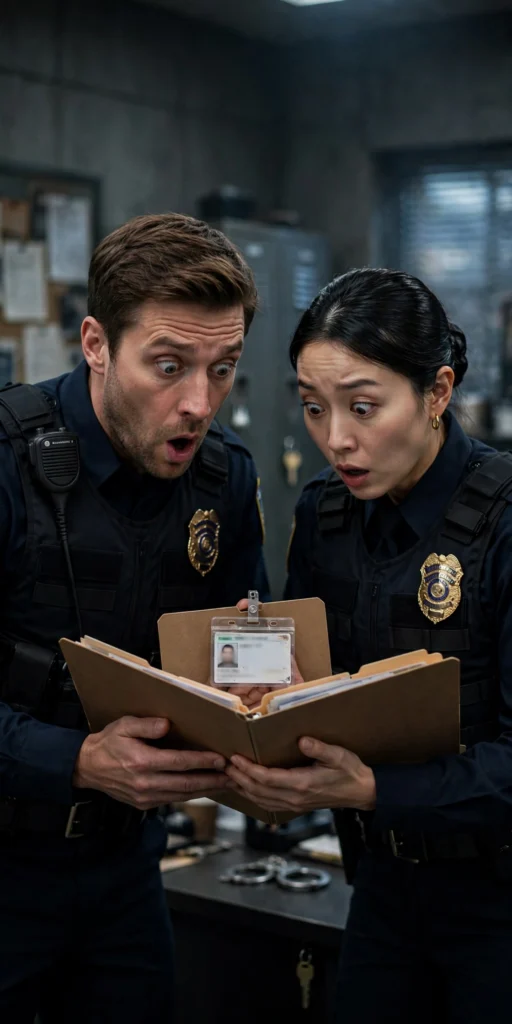
Monica heard the keys before she saw them.
The cell door swung open, and the sergeant was standing there — the same man who had barely glanced at her during booking — now white as paper, holding her file like it might burn him.
“Ms. — Detective,” he stammered. “Detective Monica. I am so sorry. There has been a terrible mistake.”
Monica stood up slowly. “What did the system tell you, Sergeant?”
He swallowed hard. “That you are Detective Monica Reyes. Undercover operations. That you have been working a retail organized-crime investigation for the past six months. That this grocery store is one of your targets.”
The silence in the cell block was total.
“And,” the sergeant continued, his voice cracking, “that your cover was classified. We were never supposed to know. We just — we just arrested an undercover detective in the middle of her own operation.”
Officer Daniels stood behind him, his face drained of color, staring at the floor. The confident men who had clicked the cuffs on her wrists an hour earlier now looked like they wanted to disappear.
Monica took her file from the sergeant’s shaking hands. “Where are my clothes?”
What Sarah Didn’t Know
Sarah had no idea what she had done.
When she pocketed that twenty dollars from her register and blamed the tired woman at the self-checkout, she thought she was solving a small problem. What she didn’t know was that Monica had been watching her store for months — documenting the skimming, the sweetheart deals, the organized crew that used that location to move stolen goods.
The arrest was the worst thing that could have happened to the operation. Monica’s cover — six months of careful, exhausting work — was blown in a single night because a cashier wanted to cover a missing twenty.
By morning, the investigation had to be restructured. Sarah was brought in for questioning, and the missing money opened a door the detectives walked straight through. Within two weeks, three employees at the store were arrested for their roles in the theft ring. Sarah was among them.
The twenty dollars she stole cost her everything.
Aftermath
Monica never filed a complaint against the two officers. She could have — and plenty of people told her she should have. But she understood something they didn’t: they were working with what they were given, and what they were given was a lie told by a woman trying to save herself.
She did make one request, though. She asked that her groceries be returned.
They were. The milk was spoiled by then, but the pineapple was fine. Her son got his favorite fruit in his lunch that week, and when he asked her why she looked so tired, she just smiled and told him work had been busy.
She never told him about the cell. She never told him about the look on the sergeant’s face when he realized who she was.
But somewhere in that town, two police officers tell the story to every rookie they train. About the night they arrested a quiet, weary woman at a grocery store — and the moment they ran her ID and their blood ran cold.
They always end it the same way: check the receipt. Check the cameras. And never, ever assume you know who you’re putting in handcuffs.